UATH Celebrates 26-Year-Old Cervical Cancer Survivor After Successful Surgery
The Chief Medical Director of the University of Abuja Teaching Hospital, Professor Thairu Yunusa, says Nigeria's healthcare system can achieve global standards through teamwork, compassion and patient-centred care.
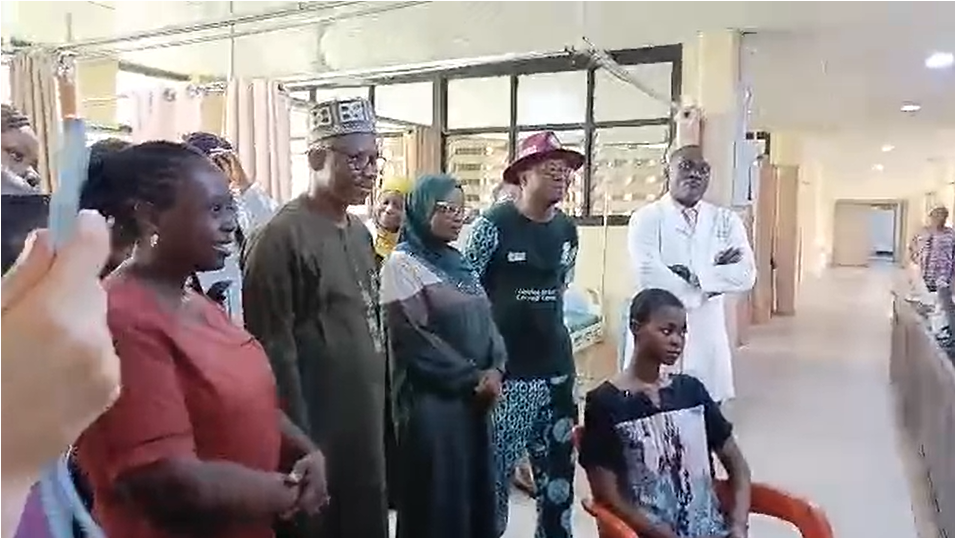
Professor Yunusa stated this in Abuja during a celebration organised in honour of the Survivor of Cervical Cancer, a 26-year-old Ms. Mercy Moses, at the Hospital in Gwagwalada.
He described the successful treatment of the patient as a major milestone for the institution and a symbol of hope for cancer patients across the country.
The CMD attributed the success to the collective efforts of doctors, nurses, social workers, cleaners, porters and other hospital staff, stressing that quality healthcare delivery thrives on teamwork.
"Mercy's journey was extremely tortuous. At several points, treatment was interrupted because of lack of funds, strikes, and limited access to radiotherapy services."
Professor Yunusa said the hospital remained committed to equitable and compassionate healthcare services, noting that despite limited resources, the institution had continued to prioritise efficiency, effectiveness and patient-centred care.
According to him, Mercy Moses had reportedly moved through several hospitals before arriving at the University of Abuja Teaching Hospital, where medical experts from different specialties collaborated to save her life.
He said the feat demonstrated that Nigeria possessed the expertise and capacity to reduce medical tourism if local healthcare institutions were adequately supported.
Cervical Cancer Care Access Fund (CCCAF)
To support more women battling cervical cancer, Dr. Lawal announced that funds remaining from Mercy Moses' public fundraising campaign would be transferred into a new initiative known as the Cervical Cancer Care Access Fund (CCCAF).
The initiative will focus on supporting one patient at a time through complete treatment rather than spreading limited funds thinly across many patients without meaningful outcomes. "If we support one patient fully and achieve survival, we believe that is more impactful than partially supporting many patients without long-term success."
The Surgical Breakthrough
A Consultant Gynaecologist in the Hospital, Dr. Ishaq Lawal, described the successful surgery performed on cervical cancer survivor Mercy Moses as a major breakthrough in cervical cancer management in low-resource settings.
According to him, Mercy Moses' journey reflects the struggles many cancer patients face in accessing adequate treatment. "Managing cervical cancer can be very challenging in low-resource settings like ours. Mercy's story shows how difficult the journey can be. We need collaborative efforts from communities, healthcare providers, government, and well-meaning Nigerians to support cancer patients through complete treatment," he said.
Dr. Lawal described the successful surgery as a turning point in the history of cervical cancer management in Nigeria, especially in resource-constrained environments.
He explained that Mercy underwent chemotherapy and radiotherapy before eventually receiving a radical hysterectomy — a highly complex procedure after radiation treatment because tissue planes are often distorted, increasing surgical risks.
The surgery lasted about six hours and involved collaboration between multiple departments, including radiology and perioperative nursing teams. "Though the surgery was difficult, the anticipated complications were less severe than expected. To the glory of God, the operation was successful," he stated.
Voices of the Medical Team
In her remark, a Consultant Gynaecologist at UATH, Dr. Habiba Abdullahi, described Mercy Moses as a symbol of resilience and hope after surviving a prolonged battle with the disease.
She explained that Mercy first presented at the hospital in September 2023 as a young orphan with little support and was eventually diagnosed with cervical cancer after histological examination confirmed the disease.
According to her, the medical team was emotionally affected by the diagnosis due to the patient's age and vulnerable condition. Dr. Abdullahi noted that despite periods of absence from treatment, the tumour did not progress rapidly, giving doctors hope for her recovery.
Another member of the medical team described Mercy's case as both "interesting and pathetic," noting that cervical cancer is rarely seen in someone so young. The doctor explained that the patient's treatment was inconsistent because of lack of funds, adding that the disease later became resistant to chemotherapy after radiotherapy.
"I often wondered if I would survive the operation. Many cancer patients I met during radiotherapy treatment in Kano lost their lives. But I remained hopeful and drew strength from the encouragement of doctors and caregivers."
Future Plans & Research Initiatives
Dr. Lawal also revealed plans for a nationwide multi-centre study on cervical cancer treatment in low-resource settings. The research will examine practical and affordable treatment approaches suitable for Nigerian healthcare realities.
Part of the study will investigate the role of ultrasound scanning as a cheaper alternative to MRI in evaluating cervical cancer patients before surgery. "Lack of funds should not mean lack of access to care. We must develop evidence-based, resource-tailored treatment models that fit our environment," he said.
The team is also proposing the establishment of an annual Cervical Cancer Survivors Day to celebrate women who have successfully completed treatment and survived the disease.
Dr. Lawal said the proposed event would serve as a platform for awareness, advocacy, and encouragement for other women currently battling cervical cancer. "Treatment is a continuum. Even after treatment, patients require monitoring and continuous evaluation," he added.
The successful surgery on Mercy Moses is now being celebrated as a landmark achievement and a symbol of hope for cervical cancer patients across Nigeria.